The real cost of "just checking"
The tax on a distraction isn't the 30 seconds you spend looking. It's the recovery. Attention research consistently shows that regaining deep focus after an interruption takes on the order of 15 to 25 minutes. Check your phone four times in a study session and you may never actually reach deep focus at all: you spend two hours at your desk and get twenty minutes of real work done.
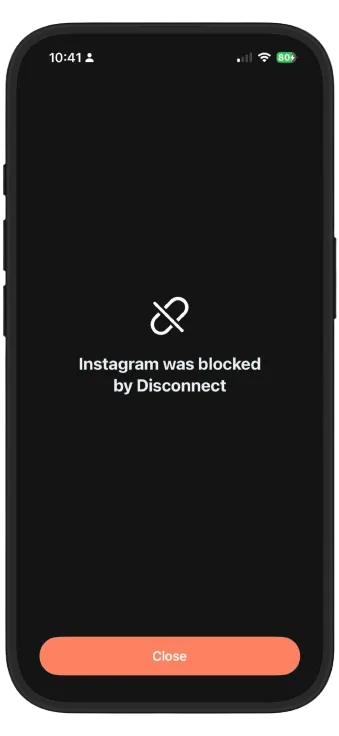
Worse, the phone taxes you even when you ignore it. Studies of "brain drain" find that a visible phone, even face down, even off, measurably reduces available working memory, because part of your attention stays allocated to not checking it. The only clean solution is making the distracting apps genuinely unavailable, so your brain can stop guarding the door.
Three setups that work
The exam sprint (one-time block)
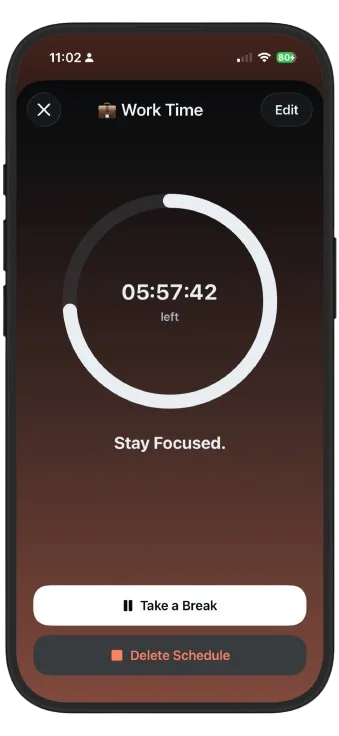
Deadline tomorrow, four hours to make count. Start a single timed block for the whole session: every feed, game and video app gone until the timer ends. One decision at the start; zero negotiations during.
The semester routine (repeating schedule)
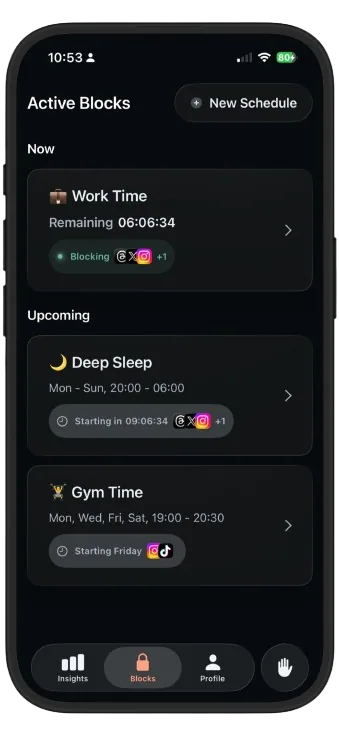
If you study 16:00–19:00 on weekdays, a standing Study Time schedule blocks your distractions during those hours automatically, all term. The routine builds itself: by week two, your brain expects those hours to be phone-quiet.
The pomodoro pairing
Working in 25/5 cycles? Set your block for the full pomodoro session (say two hours), not per interval. Breaks are for standing up and looking out a window. A 5-minute feed break has a way of eating the next pomodoro.
- Tap Start Block before you open your notes. Make it the first move of every session.
- Select your distraction list: social, video, games. (Category selection catches the apps you'd conveniently forget.)
- Set the duration to your full session and tap Block. The countdown on screen doubles as your session timer.
- For recurring study hours, create a Study Time schedule instead. Same hours, every week, no setup ritual.
- After exams, check Insights. Watching your study-hours screen time flatline is its own reward.
Beyond the block
The block removes the biggest thief, but two habits multiply it. Put the phone out of reach: a blocked app can't tempt you, but a buzzing lock screen still can, and a different room beats face down. And protect your best hours: schedule your blocks over the time of day your brain works best, and give the feeds your leftovers instead of the other way around.